Ceremonial
Tea.
Tea ceremony is among the oldest continuous contemplative practices in the world. In the traditions from which this session draws — Japanese chado and Taoist gongfu cha — the preparation and drinking of tea is not the point. The cultivation of presence through the preparation and drinking of tea is the point.
A mindful, meditative tea practice — presence, stillness, and the wisdom of slowness. Often used as a transition between offerings.
- Duration
- 45 min
- Investment
- $333
- Location
- Sedona Arizona
- Booking
- Reserve by appointment
The art of
not rushing.
Tea ceremony is among the oldest continuous contemplative practices in the world. In the traditions from which this session draws — Japanese chado and Taoist gongfu cha — the preparation and drinking of tea is not the point. The cultivation of presence through the preparation and drinking of tea is the point.
The session moves slowly, deliberately, and in silence for much of the time. The tea itself — aged pu-erh, single-origin high-mountain oolongs, white teas of specific provenance — is chosen to produce states of clarity and calm that are physiologically distinct from ordinary relaxation.
Many guests arrive intending to relax. They leave having experienced something closer to meditation — but arrived at through the hands and the body rather than through instruction.
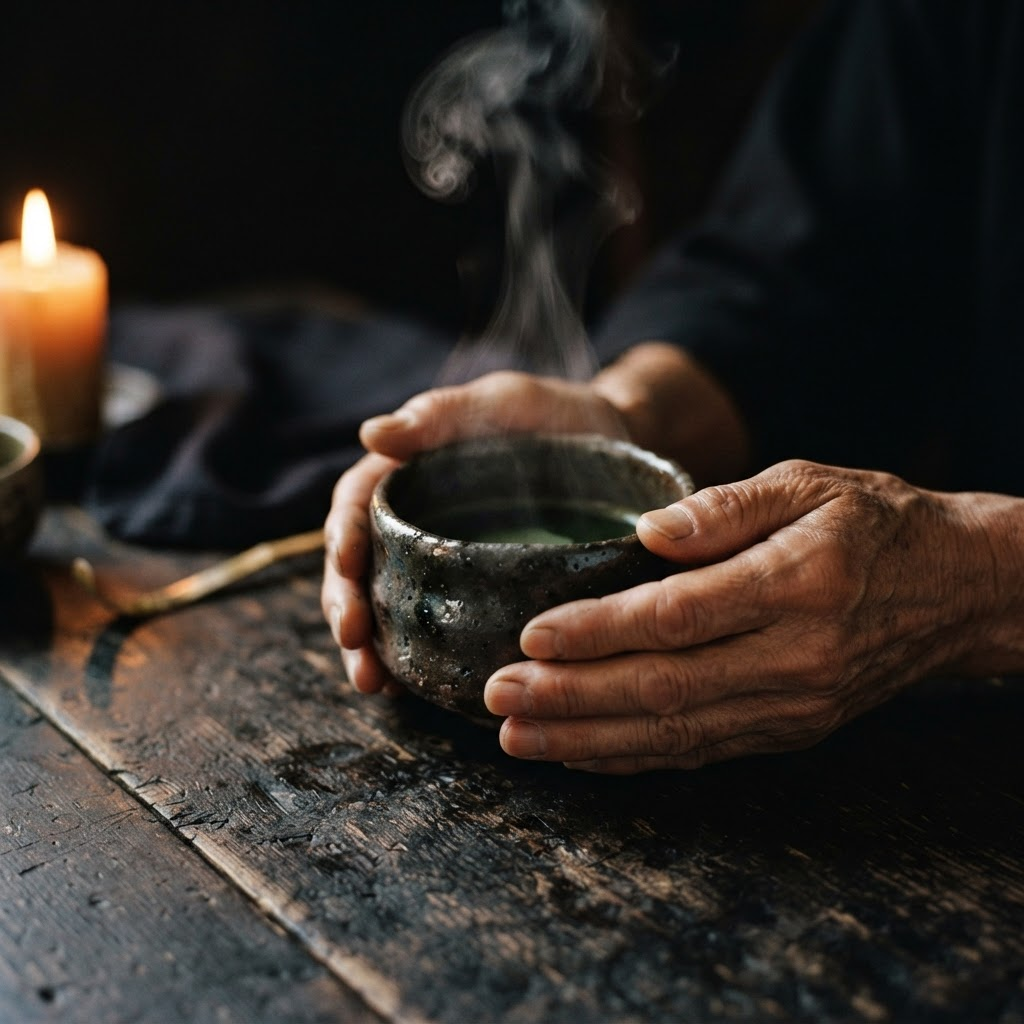
The art of not rushing.
Presence found through the simplest possible act.
The active constituents of tea — L-theanine and caffeine in specific ratios — produce a state of focused calm that has been extensively documented in cognitive research: alpha brainwave enhancement, reduced anxiety without sedation, improved attention without the jitteriness associated with caffeine alone. High-quality aged teas have additional compounds not present in commercial tea, including theabrownins and GABA, with distinct calming and prebiotic effects.
The ceremonial context amplifies these effects through the physiological mechanism of attention training. The deliberate, slow movements required in gongfu cha engage the same neural circuits as mindfulness meditation — producing measurable reductions in default mode network activity and a shift toward present-moment awareness.
How to prepare
(it's simple).
The session works best when the body has room to receive it. A few small choices in the hours around your visit make a surprisingly large difference.
- ARRIVE
- On an empty stomach or after a light meal. Tea is absorbed and tasted differently when digestion is quiet.
- AVOID
- Coffee in the hours before. It interferes with your ability to taste the subtlety of the tea.
- BRING
- A question, if you have one. Tea ceremony has a way of answering things that were not asked directly.
- AFTER
- Move slowly. The practice of presence cultivated in ceremony does not have to end when the session does.
Frequently
asked
questions.
What tradition does this follow?+
The session draws from both the Japanese chado tradition and the Taoist practice of gongfu cha, adapted to the spirit of this space and this landscape.
How many teas will we drink?+
That depends on the session and the conversation. A typical ceremony includes three to five steepings of one to three teas.
Is there caffeine?+
Yes, all traditional teas contain caffeine. If caffeine is a concern, please let us know when booking and we will adapt accordingly.
People leave Ceremonial Tea changed in ways they can feel but not always explain.
A private tea ceremony — the ancient practice of sitting with tea as a form of meditation, presence, and connection.
Chapter II · The Arc of a Session
Let the medicine be simple again
Before words, before doctrine, there was a fire, a pot of water, and a plant offered in trust. Ceremonial tea returns you to that root — a slowing down so complete that the body remembers how to receive. Warmth moves inward, the breath lengthens on its own, and the mind loosens its grip without being told to. This is not a beverage. It is a small, deliberate pause built to reacquaint you with your own quiet.
Discover our
other offerings
Sound Experience
A private, one-on-one sound healing session — the full range of instruments, applied with complete attention to you alone.
Private Sound Healing in the Temple with Sonya
A sound healing session in Sonya’s private temple space — an environment built specifically for this work, where the acoustics, the objects, and the intention of the space itself become part of the session.
Medicine Walk on the Land
A guided medicine walk in the Sedona landscape — a practice of moving through the land with intention, using what you encounter outside as a mirror for what is happening inside.
Stay curious.
Begin gently.
There is always another layer waiting to be discovered.